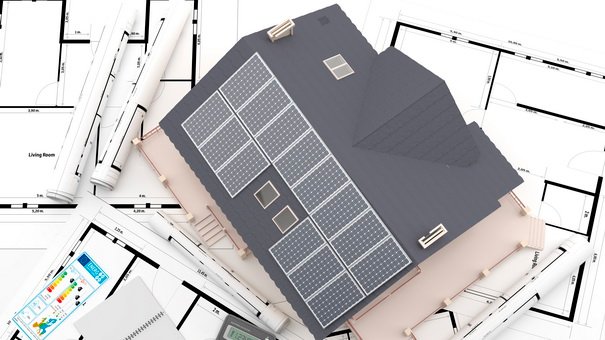
Over the past two decades, solar energy technology has seen remarkable progress, with solar panels now a common sight on rooftops. In many neighborhoods, it’s typical to encounter homes that showcase solar installations covering a significant portion of their roofs.
Perhaps you’ve had a visit from a solar representative eager to discuss installation options for your home. As these proposals have become increasingly familiar, you might find yourself unclear about how solar energy operates or the potential cost benefits, leading to some hesitation in considering this energy source.
If you have questions about adopting solar energy, rest assured that you are not alone. Many potential users ponder two crucial questions: What is the financial commitment involved? And when can they expect to see a return on that investment?
Understanding Solar Panel Costs
Let’s delve into the specifics regarding the cost of solar panel installation. While saving the environment is a noble cause, it comes with a hefty price tag, despite the sun’s free availability over millennia.
EnergySage, a solar marketing firm based in New England, suggests assessing the cost of solar panels by measuring in dollars per watt, a metric that tends to be similar nationwide.
This year, most homeowners are spending between $2.87 and $3.85 per watt to install solar systems, with an average preliminary cost of solar panels (before applying tax credits) around $16,800. After factoring in available tax credits, this outlay can shrink to between $10,000 and $13,500, based on a typical 5kW solar system installed in the U.S. EnergySage notes that these figures represent a 9% decrease compared to last year, though they recommend homeowners seek quotes from multiple providers in their area for comparison.
Now that we’ve clarified the installation costs, it’s logical to ask how long it will take to recoup that investment. (For further tips, check out: 10 Ways Anyone Can Go Solar and Save on Energy)
Estimating Your Break-Even Point
According to Sarah Hancock, a digital marketing strategist overseeing solar topics at BestCompany.com, the timeframe to break even on a solar investment hinges on three primary factors.
1. Current Utility Rates
The prevailing electricity rates in your locality directly affect your savings. The higher the rates, the quicker you can expect to recover your investment. Hancock explains, “A resident of California, where electricity costs about 17 cents per kilowatt-hour, will reach their break-even point sooner than someone in Washington, where the rate is around 9 cents per kilowatt-hour, because the Californian will enjoy more substantial monthly savings on their utility bill.”
2. Available Incentives
Incentives for solar energy can differ significantly across states. Various financial supports—including tax credits, rebates, performance payments, and tax exemptions—can influence the speed of your break-even period. “A prominent incentive is the 30% federal tax credit,” comments Andy Schell, marketing manager at Paradise Energy Solutions. “It allows solar system owners to recover 30% of project costs, and if not fully utilized in the first year, the remaining part can be applied over the next 20 years. Additionally, certain businesses and farms may qualify for USDA grants and accelerated depreciation.”
You can explore what solar incentives are available in your state through dedicated resources.
3. Payment Methods
Hancock clarifies that homeowners can either buy their solar panels outright or finance them through loans, leases, or power purchase agreements (PPAs), which generally last 10 to 25 years.
There tends to be less evidence showing that properties increase in value with a PPA or lease, primarily because a purchase or loan means the homeowner won’t owe anything for the energy produced—having already covered its costs. In contrast, with a PPA, the new occupants might still have energy bills, albeit at reduced rates compared to their neighbors. Such agreements are easily transferable and can be settled by either party if necessary.
The fastest method for breaking even is determined by the combination of local utility rates and available incentives. In areas with high electricity costs and multiple incentives, loans usually provide quicker returns. Conversely, regions with lower rates and fewer incentives may find that outright purchases lead to faster break-even timelines.
To generalize, Hancock estimates that most homeowners can expect to break even within 15 to 25 years.
Leasing Versus Buying Solar Systems
Julio Daniel Hernandez, a representative from EnLight.Energy, advises homeowners on a key question in deciding between leases and outright purchases: What is your tax liability? Should your tax situation allow full use of both federal and state tax incentives, taking advantage of loans and tax credits might be beneficial. If your tax liability is minimal, a PPA or lease option might be preferred, providing immediate savings while avoiding upfront costs, often yielding around 20% savings compared to utility rates.
Hernandez’s assessment of break-even points is more optimistic than Hancock’s. “With a PPA or lease, the break-even is effectively immediate as you incur no upfront costs, beginning to save right away like you would with a third-party electric provider in deregulated markets,” he notes. “If you purchase, depending on available incentives, your break-even point can be as low as eight years.”
How Solar Pricing and Incentives Have Shifted
Two decades ago, early solar adopters benefited from generous incentives, a scenario less common today as more people turn to solar energy. However, like many technologies, prices have dropped significantly over time.
“It’s important to note that, while incentives have diminished due to the growing popularity of solar, panel costs have decreased by over 60% in the last decade,” Hancock explains. “Thus, even with reduced federal and state support, solar energy remains a more affordable option for consumers.”
Evaluating the Investment
In general, investing in solar power is a prudent financial decision with substantial returns over a 20 to 30 year span in most regions. For instance, a California resident who purchases a system outright might anticipate returns ranging from $30,000 to $40,000 within 25 years, while a Washington homeowner may expect returns around $10,000 in a similar scenario.
Though the financial gains differ by region, both individuals would benefit from savings attributable to solar energy.
According to Hernandez, upgrading to solar energy could potentially enhance your property value by over $15,000, depending on the system’s size. The most notable increase is associated with the mere presence of solar panels, with additional valuation linked to system capacity.
Enjoying this article? Pin it!